
Wire Fraud
Wire fraud happens when criminals deceive someone into sending money by bank transfer, wire transfer, payment app, crypto transfer, or another electronic payment method.
Key warning
Once money is transferred, it can be very difficult to recover.
Always verify payment instructions independently before sending money, especially if bank details have changed or the request feels urgent.
Payment fraud alert
“Please send the payment today.”
Wire fraud often works by making a payment request look normal, trusted and urgent. The scam may appear to come from a solicitor, supplier, employer, family member, buyer, seller or senior executive.
Common trick
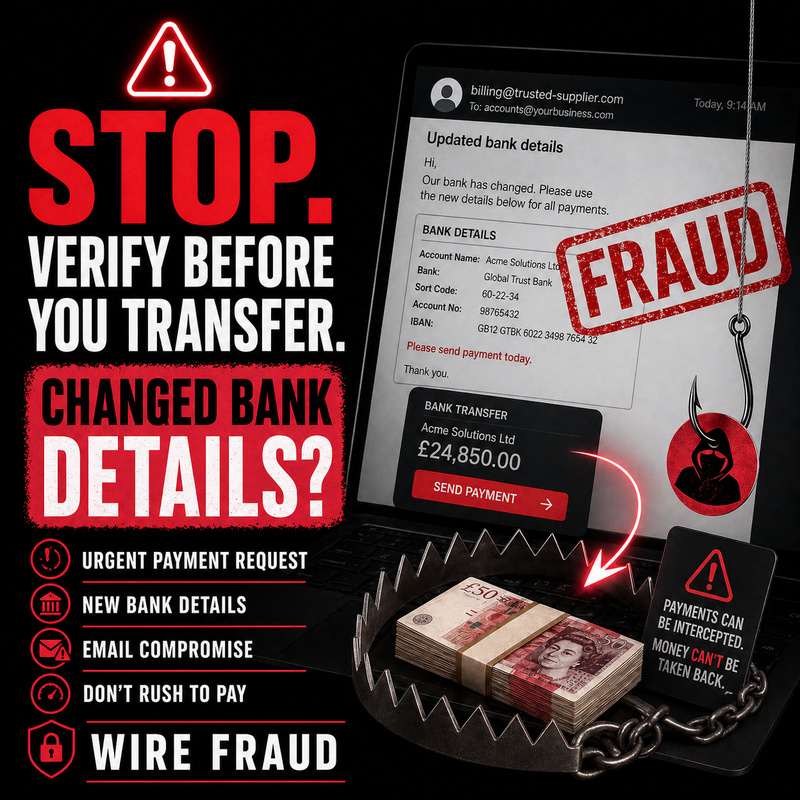
“Our bank details have changed. Please use this new account.”
Common pressure
“This must be paid immediately or the deal will fail.”
What is wire fraud?
Wire fraud is a scam where criminals trick a person or business into sending money electronically. The payment may be made by bank transfer, wire transfer, payment app, international transfer or cryptocurrency.
The fraud often relies on impersonation, urgency and trust. The victim believes they are paying a real person, supplier, solicitor, company, investment provider or family member, but the money is sent to a criminal-controlled account.
ScamAdvisory rule
Verify before you transfer. A real payment can wait while you check.
Why wire fraud works
Wire fraud succeeds because the request often appears to come from someone you already trust. The criminal may copy email signatures, use similar domain names, intercept conversations, impersonate a known contact or create a fake sense of authority.
The scammer may also time the request carefully. They may wait until a property purchase, supplier payment, invoice settlement, job offer, investment or family emergency is already in progress.
High-risk payment situations
- • Property deposits or conveyancing payments.
- • Supplier invoices or changed bank details.
- • Business email compromise and executive impersonation.
- • Investment transfers or crypto payments.
- • Family emergency requests by text, email or messaging app.
The payment request may look genuine
Wire fraud often hides inside normal financial activity. The message may look professional, the timing may feel believable, and the bank details may be presented with confidence.
Invoice redirection
A fake message claims supplier bank details have changed and asks you to pay a new account.
Property payment fraud
Criminals impersonate a solicitor, estate agent or conveyancer during a house purchase.
Business email compromise
A scammer impersonates a senior person, supplier or colleague to authorise a payment.
Family emergency transfer
A message claims to be from a family member needing urgent money from a new phone number.
Investment transfer fraud
Victims are pressured to send money to fake brokers, platforms, crypto wallets or investment accounts.
Payroll or account change fraud
A fake employee or supplier requests payment details to be changed before the next payment run.
Pause before you send money
Wire fraud relies on urgency, authority and trust. Slow the payment down and verify the details through a separate trusted route.
Risk level
Critical
Changed bank details
Someone tells you to use a new account number, sort code, IBAN, wallet or payment route.
Urgent payment pressure
You are told the payment must happen now or there will be serious consequences.
Slightly odd email
The email looks familiar but the domain, spelling, signature or reply address is slightly wrong.
Secrecy request
You are asked not to discuss the payment with anyone else or to bypass normal checks.
Unexpected invoice or attachment
You receive a sudden invoice, payment instruction, PDF, link or banking document.
New communication channel
A known contact suddenly switches to a new phone number, email address or messaging account.
Verify payment details before transferring money.
Stop the payment if anything feels rushed, unusual or changed.
Verify bank details using a phone number or contact method you already trust, not the one supplied in the message.
For businesses, require a second-person approval process for new payees and changed payment details.
Check the email domain carefully. Look for extra letters, swapped characters, free email accounts or unusual reply-to addresses.
If money has already been sent, contact your bank immediately and say you believe you have been the victim of fraud.
ScamAdvisory
Treat urgent payment requests as high-risk until verified.
Wire fraud can happen to individuals, families and businesses. Slow the payment down, verify independently, and never send money just because a message sounds official or urgent.