
Social Media Scam
Social media scams use fake profiles, hacked accounts, adverts, marketplace listings, direct messages and viral posts to trick people into sending money, sharing personal data or trusting a false identity.
Key warning
A familiar profile does not always mean a trusted person is behind the message.
Accounts can be hacked, cloned or impersonated. Verify unexpected requests through a separate trusted route before clicking, paying or replying.
Social media fraud alert
“I saw it on social media.”
Scammers use social platforms because trust spreads quickly. A post, message or advert can feel genuine when it appears to come from a friend, group, brand or influencer.
Common hook
“Limited offer. Message me now before it disappears.”
Common pressure
“Pay today, keep it private, and I’ll secure your place.”
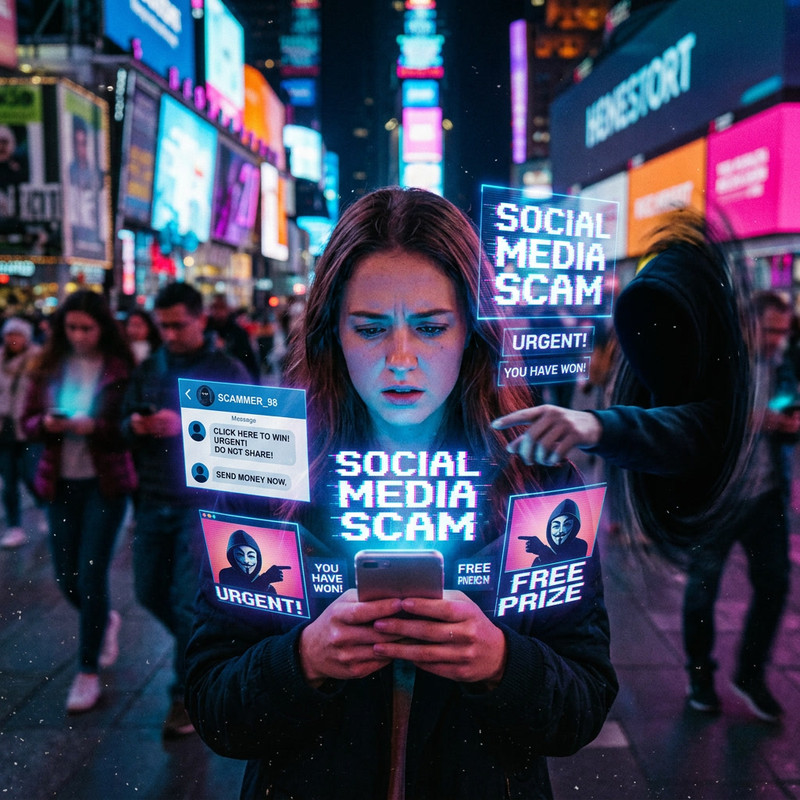

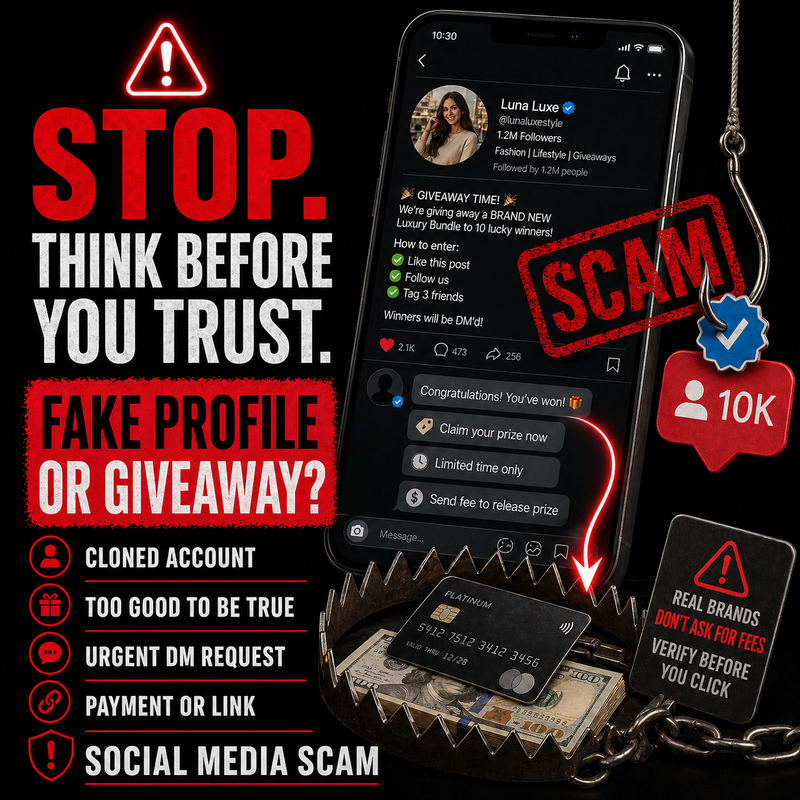
What is a social media scam?
A social media scam is any fraud that begins, spreads or gains trust through a social platform. It may start as a post, advert, direct message, marketplace listing, comment, group invitation, friend request or fake profile.
The scammer may pretend to be a friend, family member, celebrity, recruiter, trader, seller, charity, brand, influencer or customer support account.
ScamAdvisory rule
Do not trust a post just because it appears inside a trusted network.
Why social media scams work
Social media creates fast trust. A scam can feel safer when it appears in a local group, has comments, uses a familiar logo, or appears to be shared by someone you know.
But scammers can clone accounts, buy followers, fake reviews, hijack profiles, manipulate comments and use targeted adverts to reach the right victim at the right moment.
Common trust tricks
- • Fake comments from other accounts saying “I got paid”.
- • Stolen photos or copied profile history.
- • Hacked accounts used to message friends and family.
- • Fake adverts using trusted brands or public figures.
- • Urgent posts in local groups offering bargains, jobs or investments.
The scam may start with a post, advert or message
Social media scams are often designed to blend into normal behaviour: scrolling, shopping, messaging, joining groups and following recommendations.
Fake or cloned profiles
A scammer copies a real person’s name, photo and details to trick friends, family or followers.
Hacked accounts
A genuine account is taken over and used to promote scams, send links or request money.
Marketplace scams
Fake sellers advertise goods, tickets, vehicles, rentals or pets that do not exist or never arrive.
Investment scams
Posts or adverts promise fast profits from crypto, trading, side hustles or “guaranteed” returns.
Prize and giveaway scams
You are told you won a prize, but must pay a fee, click a link or provide personal details to claim it.
Job and task scams
A fake opportunity promises easy money, remote work, paid tasks or recruiter contact through messages.
Pause before you click, pay or reply
Social media scams rely on speed, trust signals and emotional triggers. Slow the interaction down and verify outside the platform.
Risk level
High
Urgent call to act
The post or message says you must act now, pay quickly or claim before it disappears.
Suspicious link
The link goes to an unfamiliar website, shortened URL, fake login page or lookalike domain.
Payment outside the platform
The seller or recruiter asks you to pay by bank transfer, gift card, crypto or friends-and-family payment.
Profile feels wrong
The account has few posts, odd comments, stolen images, sudden changes or behaviour that feels out of character.
Requests for codes or login details
They ask for passwords, two-factor codes, reset links, card details or access to your account.
Too-good-to-be-true offer
The deal, job, prize, investment or giveaway appears far better than normal.
Verify outside the platform before trusting the request.
Do not click links from unexpected posts, adverts or direct messages.
Contact the person through another trusted method if their account sends a strange message.
Do not send money, codes, account details or identity documents through social media messages.
Check the official website directly instead of trusting links from adverts or posts.
Report fake profiles, hacked accounts, scam adverts and suspicious posts to the platform.
ScamAdvisory
Not everything shared by a trusted network can be trusted.
Social media scams spread through attention, trust and speed. Slow down, verify outside the platform, protect your accounts and report suspicious profiles, posts and adverts.