
Romance Scams
Romance scams happen when criminals build emotional trust, create false relationships, and then exploit victims for money, gifts, or personal information.
Key warning
Catfishing is one of the most common tactics used in romance scams.
A scammer pretends to be someone they are not, often using stolen photos, fake life stories, and emotional manipulation to gain trust.
Emotional manipulation
“I feel like I can trust you...”
Romance scammers often move quickly, create intense emotional bonds, and then introduce a crisis, emergency, or request for money.
Common excuse
“I want to meet you, but I need help with travel costs.”
Common pressure
“Please don’t tell anyone — they wouldn’t understand us.”
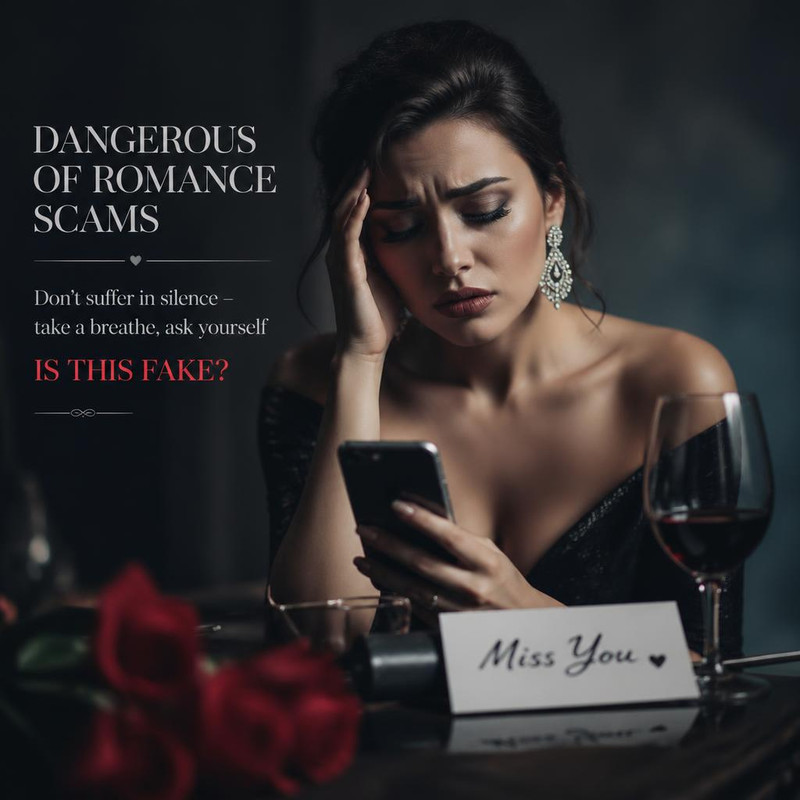
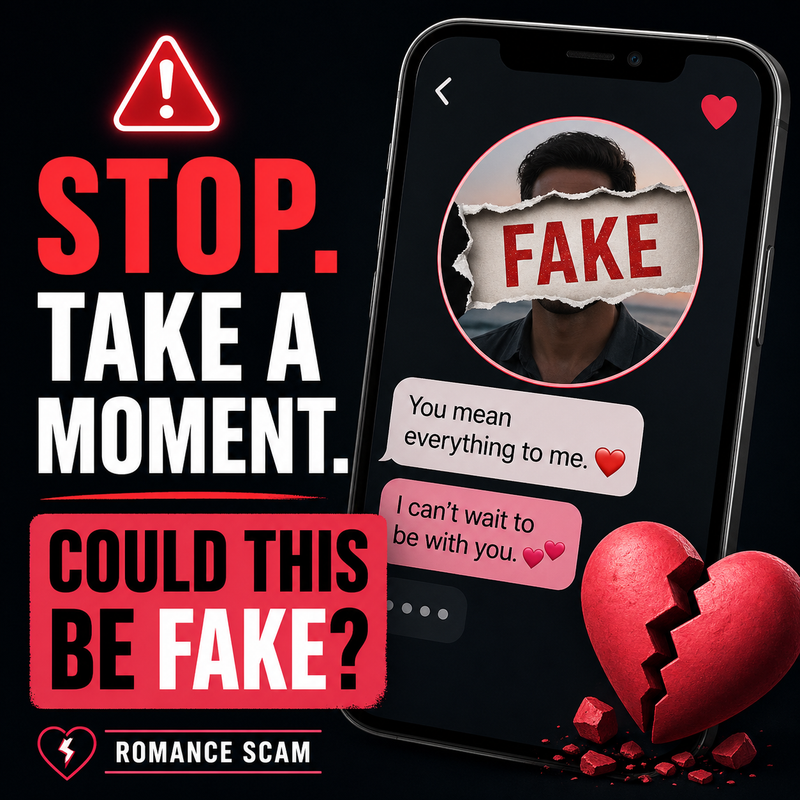
What is a romance scam?
A romance scam is when a criminal pretends to build a personal or romantic relationship with someone online in order to gain trust and eventually take money, information, or control.
These scams often begin on dating sites, social media, messaging apps, or even through unexpected friend requests. The relationship may seem caring, affectionate, and serious — but it is designed to manipulate.
ScamAdvisory rule
If someone you have never met starts asking for money, stop and verify.
Catfishing explained
Catfishing is when someone creates a fake identity online to deceive another person. In romance scams, this often means using stolen photos, fake names, fake jobs, and invented personal histories.
The scammer may claim to be in the military, working offshore, deployed abroad, widowed, or otherwise unable to meet in person. These stories are used to explain why they cannot video call properly, cannot meet, or suddenly need financial help.
Common catfishing signs
- • Their photos look too polished or inconsistent.
- • They avoid meeting in person or always cancel.
- • They quickly become emotionally intense.
- • They always have a reason they cannot video chat properly.
- • They eventually ask for money, gift cards, bank help, or private images.
Watch for emotional pressure
Romance scammers are skilled at creating trust, urgency, sympathy, and secrecy.
Risk level
High
Fast emotional attachment
They say “I love you” very early and try to become central to your life quickly.
Identity feels false
Their background story is dramatic, vague, or changes over time.
Avoids real contact
They avoid proper video calls or meeting face to face.
Money request
They ask for help with travel, bills, emergencies, visas, hospital costs, or business problems.
Secrecy
They ask you not to tell family or friends about the relationship.
Private image pressure
They push for intimate photos or personal information that could later be used against you.
Pause, verify, and protect yourself.
Do not send money, gift cards, banking details, or personal documents to someone you have not properly verified.
Slow the conversation down. Romance scammers rely on speed and emotion.
Reverse search profile photos, check names, and challenge inconsistent stories.
Talk to a trusted friend or relative before sending anything. A second opinion can break the emotional spell.
If you have already sent money or information, contact your bank immediately and report the incident.
ScamAdvisory
Don’t let emotion hide the warning signs.
Romance scams can affect anyone. Take your time, verify who you are speaking to, and never let pressure or affection override your safety.