
Job Scams
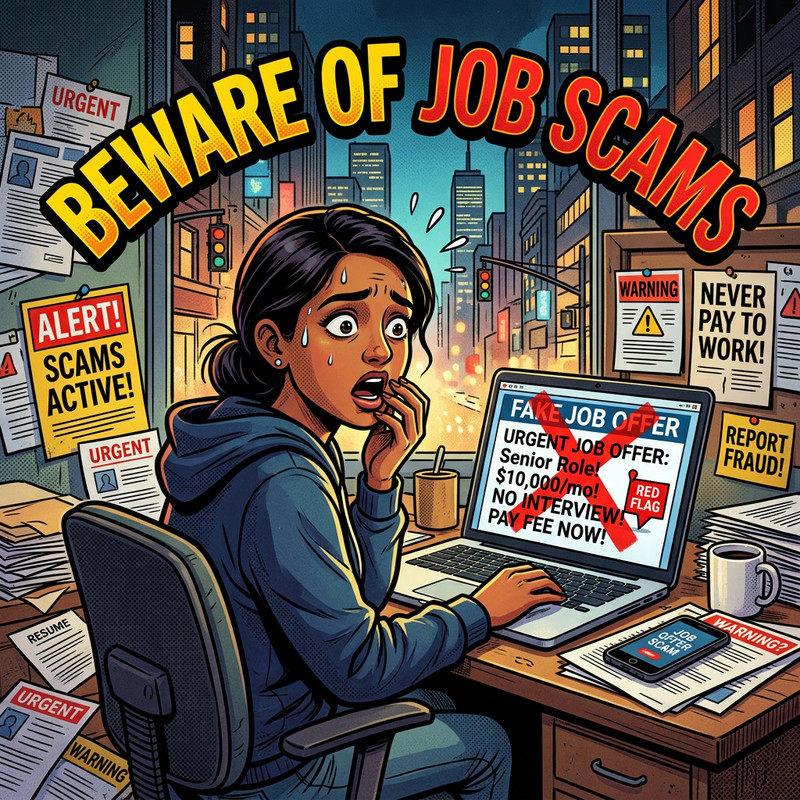
Job scams are not only about fake vacancies. Criminals and rogue operators may use job adverts to collect personal data, request documents, charge illegal fees, or pressure people into unsafe work.
Key warning
A real job should not require you to pay upfront fees before you start work.
Be especially careful if a recruiter asks for money, passport scans, bank details, National Insurance details, or identity documents before you have verified the employer.
Fake recruitment alert
“You have been selected for immediate start.”
Job scammers use hope, urgency and financial pressure. They know people looking for work may respond quickly when an opportunity looks promising.
Common hook
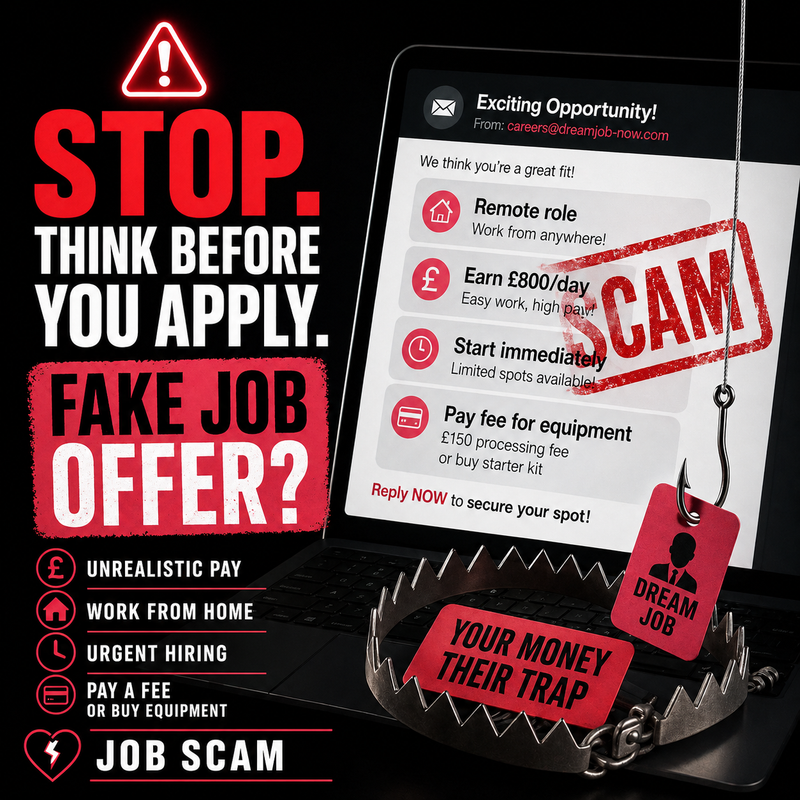
“No interview needed. Work from home. Start today.”
Common demand
“Pay the admin fee and upload your passport to secure the role.”
What is a job scam?
A job scam is when a criminal, fake recruiter, fake employer or dishonest operator uses the promise of work to steal money, collect documents, harvest personal data, or move victims into risky activity.
Some job scams advertise roles that do not exist. Others look more realistic and may involve fake interviews, fake onboarding forms, fake training fees, fake equipment costs, or requests for identity documents.
ScamAdvisory rule
Verify the employer before you pay, upload documents, or share bank details.
Data harvesting and document requests
Not every job scam asks for money straight away. Some are designed to collect useful personal information from your CV, application form, passport, driving licence, proof of address, National Insurance number or bank details.
This information can later be used for identity fraud, account opening, social engineering, or further targeted scams.
Be careful before sharing
- • Passport or driving licence images.
- • Proof of address documents.
- • National Insurance number.
- • Bank account details before a verified job offer.
- • Full date of birth, address history and identity documents through unknown links.
The scam is not always obvious
Job scams can look professional. Some use real company names, copied branding, fake recruiter profiles and convincing onboarding forms.
Fake employer
A scammer pretends to represent a real company and offers a role that does not exist.
Upfront fees
You are asked to pay for registration, training, background checks, equipment, admin or job placement.
Document harvesting
The advert is used to collect passports, licences, proof of address, CVs and personal details.
Messaging app recruitment
The recruiter moves quickly to WhatsApp, Telegram or text and avoids official company email.
Money mule roles
You are asked to receive, transfer, process or move money as part of a fake job.
AI-assisted fake hiring
Scammers may use polished messages, fake interviews and generated profiles to look more convincing.
Stop before you apply
Be cautious when a job offer feels too easy, too urgent, too secretive, or too focused on your documents and money.
Risk level
High
Instant job offer
You are offered the role with little or no interview, checks, or proper recruitment process.
You must pay first
You are asked for money to secure the job, receive equipment, access training, or complete registration.
Early document demand
They request identity documents before you know the employer is genuine.
Suspicious website or email
The domain does not match the real company, or the email uses a free mailbox.
Vague recruiter identity
The recruiter avoids naming the employer, hides details, or gives inconsistent information.
Money movement
The role involves receiving payments, moving funds, buying crypto, forwarding parcels, or using your bank account.
Verify the job before you trust the offer.
Search the company directly. Do not rely only on links sent by the recruiter.
Check the recruiter’s email domain, phone number, website and LinkedIn presence.
Do not pay fees to secure a job, interview, placement, work equipment or training.
Do not upload identity documents until you are confident the employer and process are genuine.
Never allow a job to use your bank account to receive, process or transfer money.
ScamAdvisory
Don’t let the promise of work become a route into fraud.
Job scams are increasing because criminals know people need work, flexibility and income. Verify the recruiter, check the company, protect your documents, and never pay to secure a job.