
Bank Card Scam
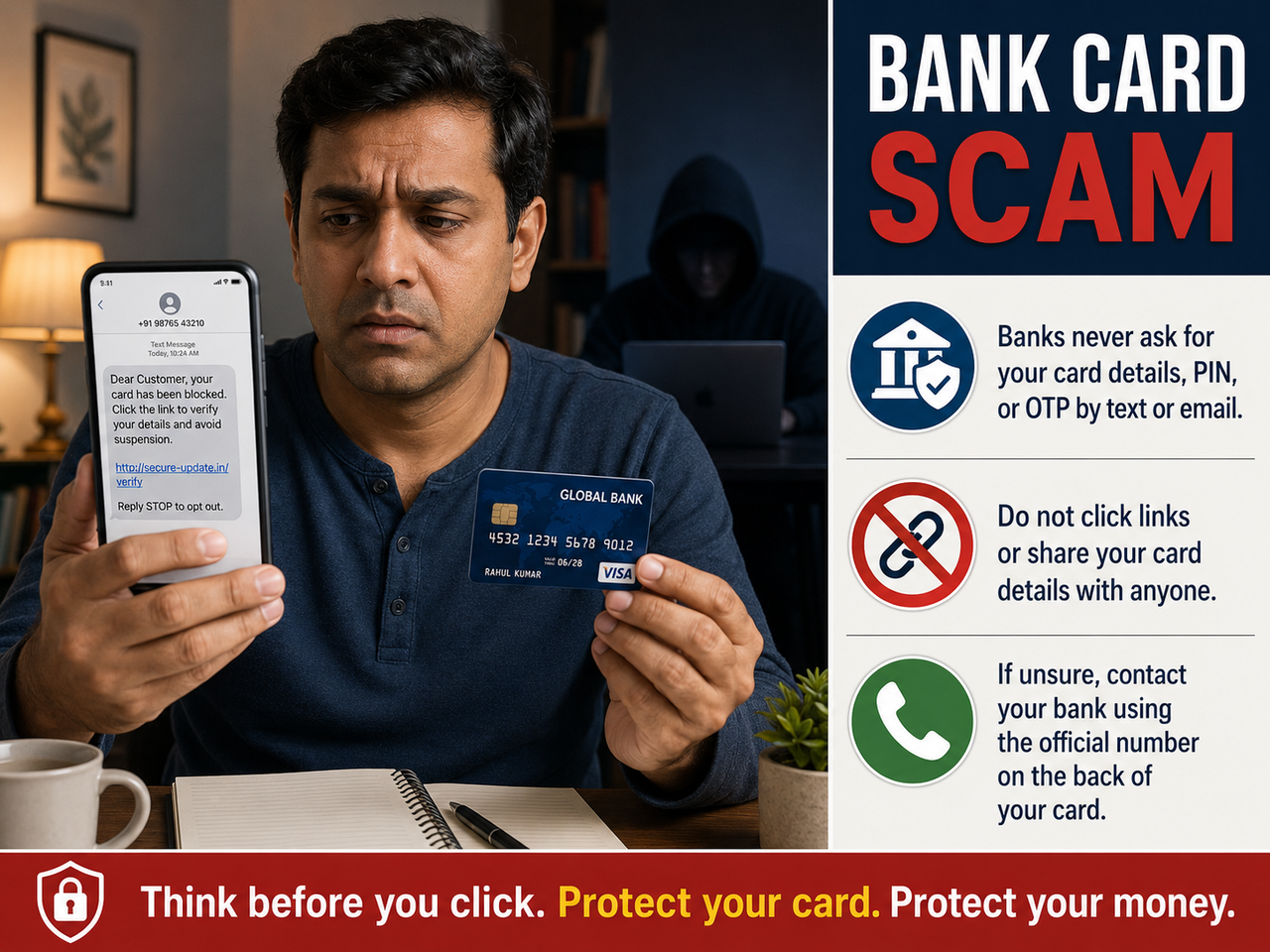
Bank card scams are designed to steal your card number, PIN, security code, one-time passcodes, banking login details or physical card so criminals can spend your money or take over your account.
Key warning
Your bank will never ask you to reveal your full PIN, card security code, one-time passcode or online banking password.
If a message, call, website or person asks for card details urgently, stop and contact your bank using the official number on your card or banking app.
Card fraud alert
“Your card has been blocked.”
Scammers often pretend to be your bank, card provider, delivery company, retailer or fraud department to make you reveal sensitive card information.
Common trick
“Verify your card details now to unblock your account.”
Common demand
“Tell us the code we just sent to prove it is you.”
Bank card are so valuable to criminals, protect your card, don't reveal important detail to just anyone. Make sure online purchased are authorised by you and no one else.
.png)
.png)
What is a bank card scam?
A bank card scam is when criminals trick you into giving away card details, security codes, PINs, one-time passcodes or banking access. They may also use physical devices to steal card data at cash machines or payment terminals.
The scam may start with a fake text, phone call, email, website, delivery fee, online checkout, ATM device or someone pretending to be from your bank’s fraud team.
ScamAdvisory rule
Your card details are enough to steal from you. Treat them like cash.
Why bank card scams work
These scams work because they create fear or urgency. A message may say your card has been frozen, suspicious activity has been detected, a payment has failed, or your account will be blocked.
Scammers also use familiar banking language, fake fraud alerts, professional-looking websites and caller ID spoofing to make the request appear official.
Common ways card details are stolen
- • Fake bank text messages or emails.
- • Fake online checkout pages.
- • Fake delivery or customs payment pages.
- • Phone calls pretending to be bank fraud teams.
- • ATM skimming devices and hidden cameras.
- • Requests for one-time passcodes or approval codes.
The request often looks urgent and official
Bank card scams can happen online, over the phone, through text messages, at cash machines, in shops or through fake payment pages.
Fake bank alert
A text or email claims your card is blocked, compromised or needs urgent verification.
Fake payment page
A website asks for card details, security code or banking login details on a lookalike checkout page.
One-time passcode theft
A scammer asks you to read out a code sent by your bank to approve a payment or login.
ATM skimming
A device attached to a cash machine copies card data while a camera or watcher captures your PIN.
Impersonation call
Someone claims to be from your bank and asks you to confirm card details, move money or approve a transaction.
Small payment trap
A fake delivery, subscription, parking, customs or verification fee is used to capture your card details.
Stop before you share card details
Bank card scams rely on urgency, fear and fake authority. A genuine bank will not pressure you into revealing sensitive security information.
Risk level
Critical
Urgent card warning
The message says your card will be blocked, suspended or charged unless you act immediately.
Suspicious link
The link does not clearly match your bank’s official website or uses a strange shortened address.
Sensitive information request
You are asked for PIN, CVV, one-time passcode, online banking password or full card details.
Unexpected bank call
A caller claims to be from your bank and wants you to verify security details or move money.
ATM looks altered
The card slot, keypad, camera area or surrounding panel looks loose, bulky, damaged or unusual.
Someone watching closely
Someone stands too close, distracts you, offers help at an ATM or watches while you enter your PIN.
Protect your card before you trust the request.
Do not click links in unexpected bank, delivery, payment or card verification messages.
Never share your PIN, CVV, one-time passcode, full banking password or card security details.
Contact your bank using the official number on the back of your card or through the official banking app.
Check ATMs and payment terminals for loose parts, unusual attachments or hidden cameras before using them.
Cover your PIN when typing and be alert to anyone standing too close, watching or trying to distract you.
If you entered card details or suspect fraud, freeze the card in your banking app and contact your bank immediately.
ScamAdvisory
Think before you click. Protect your card. Protect your money.
Bank card scams are designed to look urgent and official. Slow down, verify through your bank’s official channels, and never reveal card security details to anyone who contacts you unexpectedly.